The October Cosmos update puts data preparation, synthetic scenarios, model adaptation and evaluation in the same developer pipeline. The details matter more than another model benchmark.
Five blueprints for hard-to-capture data
Cosmos Data Factory now includes reference workflows for autonomous-driving datasets, image attribute augmentation, rare-event video generation, visual defect images and weather or lighting variation in video. These are different data problems: a factory inspecting metal components needs deliberately placed defects, while a mobile robot needs changing scene geometry and temporal consistency. The useful question is which blueprint matches the missing training examples.
From raw footage to a training dataset
A practical pipeline starts by ingesting camera or robot logs, selecting relevant sequences and labeling object motion, context and outcomes. Synthetic examples can then expand specific gaps rather than blindly multiply footage. NVIDIA’s repository describes orchestration through Airflow and Kubernetes and includes separate skills for curation, annotation, simulation, augmentation and evaluation. Developers can inspect those building blocks rather than treating the workflow as a black box.
How industrial teams are using it
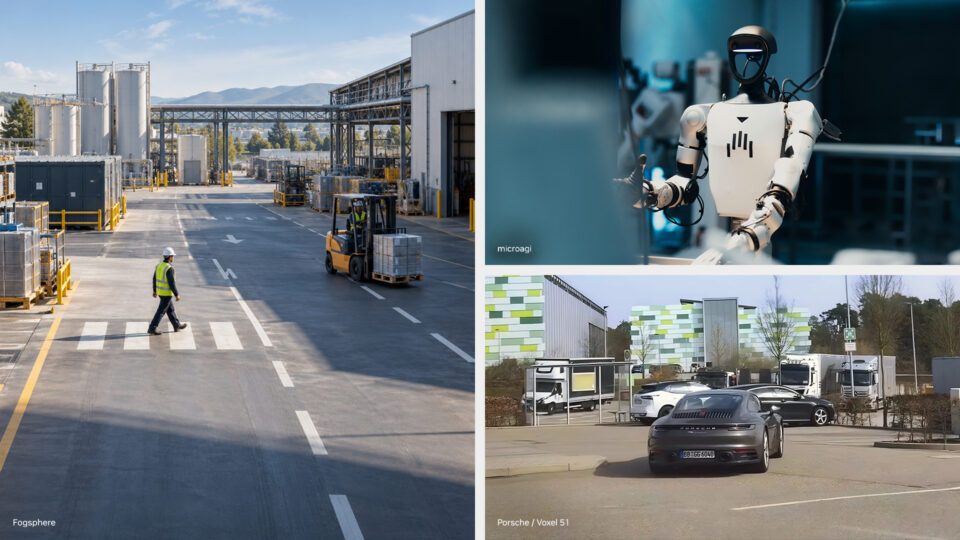
In its release, NVIDIA describes ANYbotics generating more than 1,500 synthetic clips representing incidents such as liquid spills to improve anomaly recognition for industrial inspection. It also describes defect-image generation for manufacturing vision systems. These examples point to a concrete use: supplement training data for situations that may be rare, hazardous or costly to record during normal production.
Implementation checklist
A team evaluating Cosmos should map real sensor formats, annotation requirements, GPU resources and model-serving interfaces before running a blueprint. Compare synthetic and real evaluation sets separately; inspect physical plausibility, object persistence and temporal errors. Record dataset origin, model revision and training parameters so the resulting policy can be reproduced and audited when deployed on real hardware.